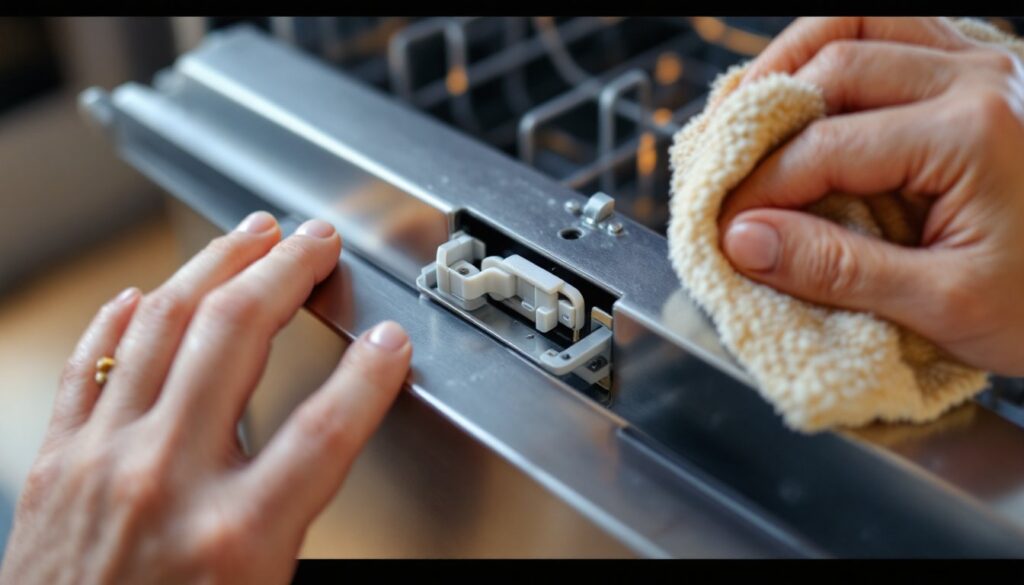

A dishwasher that won’t close is more than just annoying, it’s a problem that’ll drain your energy and wallet if left alone. Water leaks, interrupted cycles, and potential damage to your kitchen floor are real risks when the door latch fails to secure properly. The good news? Most dishwasher door closing issues are fixable without calling in a repair technician. Whether your dishwasher won’t close due to a bent latch, misaligned hinges, or a worn seal, you’ve likely got the tools to handle it yourself. This guide walks through six practical fixes, starting with the easiest troubleshooting steps and moving toward repairs that might take a bit more elbow grease.
Table of Contents
ToggleKey Takeaways
- A dishwasher door not closing is usually fixable at home by inspecting the latch assembly, strike, hinges, and door seal before calling a professional.
- Clean the latch and strike thoroughly with mild soap and a damp cloth, as food debris and mineral deposits often prevent proper latching without requiring part replacement.
- Check door hinge alignment by opening the door halfway—it should hold steady, and gaps between the door and frame should be even on both top and bottom edges.
- A worn or cracked door seal allows water leaks and loose latching, and replacement is a beginner-friendly repair costing $20–$60 that typically takes just a few minutes.
- Call a professional technician if hinges are severely bent, bolts are seized, the door frame is warped, or the dishwasher door still won’t close after trying multiple fixes.
- DIY repairs for a dishwasher door not closing usually cost just $15–$60 for parts, making them far more affordable than professional labor ($150–$300 plus parts).
Check The Door Latch Assembly
The latch assembly is the mechanism that catches and holds the door firmly in place. When a dishwasher won’t close or stays loose, the latch is often the culprit. Start by opening the door fully and looking at the latch on the inner edge of the door, it’s usually a plastic or metal hook that extends into the strike (the corresponding catch on the frame).
How To Inspect And Clean The Latch
Before you assume the latch is broken, try this simple fix:
- Open the door and examine the latch closely. Look for visible cracks, warping, or discoloration in the plastic housing or the metal hook itself.
- Clean the latch and strike area thoroughly. Food debris, detergent buildup, or mineral deposits can prevent the latch from seating properly. Use a damp cloth and mild dish soap, avoid harsh abrasives that can damage plastic components.
- Inspect the strike on the frame. Make sure it’s not bent, blocked, or corroded. Wipe it clean as well.
- Close the door gently and listen. A properly functioning latch should make a distinct click sound as it catches. If you hear nothing or feel resistance, the latch may be damaged.
If the latch appears cracked or the plastic is permanently bent, you’ll likely need to replace the assembly. Most dishwasher latch assemblies are fastened with one or two bolts or screws on the interior side of the door panel. Document the exact model of your dishwasher (usually found on a sticker inside the door edge) before ordering a replacement, latches vary significantly between manufacturers and models.
Cleaning often solves the problem because mineral deposits from hard water or dried detergent can act like a wedge, preventing the latch from fully closing. This is especially true if you live in an area with water hardness issues that leave residue on appliances.
Examine The Door Strike
The door strike (also called the strike plate or catch) is the stationary piece on the dishwasher frame that receives the latch. If the strike is bent, misaligned, or damaged, even a perfect latch won’t close properly.
Open the door and look directly at where the latch lands when closed. The strike should be smooth, flush against the frame, and positioned so the latch hooks cleanly into it without forcing.
Check for these common issues:
- Bent or dented strike. If the strike has a visible bend or dent, it may need replacing. On many models, the strike is bolted to the frame and can be unbolted and replaced without removing the entire door assembly.
- Misaligned strike. If the strike has shifted slightly, the bolts holding it may be loose. Tighten them with the appropriate wrench or socket. If tightening doesn’t help, the holes may be stripped: in that case, drilling new holes nearby and re-fastening is sometimes possible, though replacing the strike is cleaner.
- Corrosion or buildup. If the strike is corroded or has mineral deposits, clean it with a soft brush and white vinegar, then dry thoroughly. This can sometimes restore a marginal fit.
If the strike is cracked or severely bent, replacement is the quickest solution. Strikes are inexpensive parts (often $15–$40) and straightforward to swap. Your dishwasher’s model number will tell you exactly which strike you need.
Realign The Door Hinges
Hinges wear over time, and years of repeated opening and closing can cause the door to sag or shift out of alignment. When the door isn’t level or is tilted, the latch won’t meet the strike correctly, and the dishwasher won’t close securely.
Here’s how to check hinge alignment:
- Open the door halfway. A properly aligned door should stay at that position without swinging shut or flying open on its own. If it drifts, the hinges have likely shifted.
- Look at the gap between the door and the frame on both the top and bottom edges. The gaps should be even on both sides. If the bottom gap is larger than the top, the door has sagged.
- Inspect the hinges themselves. Hinges are usually located on the inner edge of the door frame, top and bottom. Check for bent pins, cracks in the hinge casting, or loose bolts.
If bolts are loose, tighten them with the correct wrench size. This often restores proper alignment and solves the closing problem immediately. Work slowly and don’t over-tighten, you can crack the plastic hinge housing if you force it.
If a hinge is clearly bent or the door still won’t close evenly after tightening, the hinge needs replacement. This is a more involved repair: you’ll need to support the door weight (a second pair of hands helps tremendously) while unbolting the old hinge and installing the new one. If you’re uncomfortable doing this alone, it’s worth calling in a technician rather than risk dropping a heavy door on your foot or cabinet.
Replace A Worn Door Seal
The door seal (or gasket) is the rubber strip running around the perimeter of the door. It creates a watertight seal when the door closes and helps the latch catch firmly. Over time, rubber hardens, develops cracks, or peels away from the door edge.
A failing seal won’t always prevent the door from closing mechanically, but it will:
- Allow water to leak during the wash cycle
- Make the latch feel loose or less secure
- Create a gap that prevents the door from latching fully
Inspect the seal by running your finger around it. If it’s cracked, hardened, sticky, or has chunks missing, replacement is due. New seals are affordable (typically $20–$60, depending on the model) and installation is straightforward.
Replacing the seal:
Most seals are glued on or held in place by a groove or clips. If it’s glued:
- Gently peel away the old seal, working slowly so you don’t damage the door edge.
- Use rubbing alcohol or adhesive remover to clean away any remaining glue residue.
- Wipe the door edge dry with a cloth.
- Follow the manufacturer’s instructions for your new seal, some come with adhesive pre-applied, others require you to apply a bead of waterproof adhesive before pressing the seal in place.
- Hold firm pressure for 30 seconds to a minute, then allow the adhesive to cure per the instructions (usually 24 hours) before running a cycle.
If the seal is held by clips or a groove, simply pull it free and snap the new one in place. Either way, this is one of the most beginner-friendly repairs on a dishwasher. Getting the right replacement seal for your model is the most important step, confirm your dishwasher’s model number before ordering so you don’t end up with a seal that doesn’t fit your door’s shape.
When To Call A Professional
Some dishwasher door closing problems are beyond safe or practical DIY territory. Know when to stop and call a technician.
Call a professional if:
- The hinges are cracked or severely bent. Replacing hinges requires supporting a heavy door safely, and a mistake could result in serious injury or cabinet damage. A technician has the right tools and insurance.
- The latch assembly won’t come loose. If bolts are seized, stripped, or corroded, forcing them risks breaking plastic tabs on the door panel. A pro can remove stubborn fasteners without collateral damage.
- The door frame itself is damaged, bent, or warped. Frame repairs involve structural work and may require partial disassembly of the appliance.
- You’ve replaced the latch, strike, and seal, but the door still won’t close. This signals a deeper mechanical issue, possibly with the door panel itself, the frame alignment, or internal mechanisms.
- Water is leaking even though a new seal. Leaks might indicate frame warping or a bent door panel, not just a seal failure.
Repair costs vary, but according to HomeAdvisor’s repair estimators, a dishwasher latch or hinge repair typically runs $150–$300 in labor, plus parts. If your dishwasher is over 10 years old or repair costs exceed 50% of a replacement unit’s price, replacement may be the smarter investment. Most dishwashers last 9–12 years, so age matters in the decision.
Conclusion
A dishwasher that won’t close is fixable more often than not. Start with inspection and cleaning, dust and debris account for surprising number of latch failures. Move to checking the strike, then hinges, then the seal. Each step is straightforward and requires only basic tools and a little patience. If you hit a stumbling block, frozen bolts, a cracked hinge, or persistent leaks, that’s the moment to call in help. Following these troubleshooting steps keeps your dishwasher running reliably and your kitchen floor dry. With these fixes in your toolkit, you’re equipped to tackle this common appliance hiccup on your own terms.