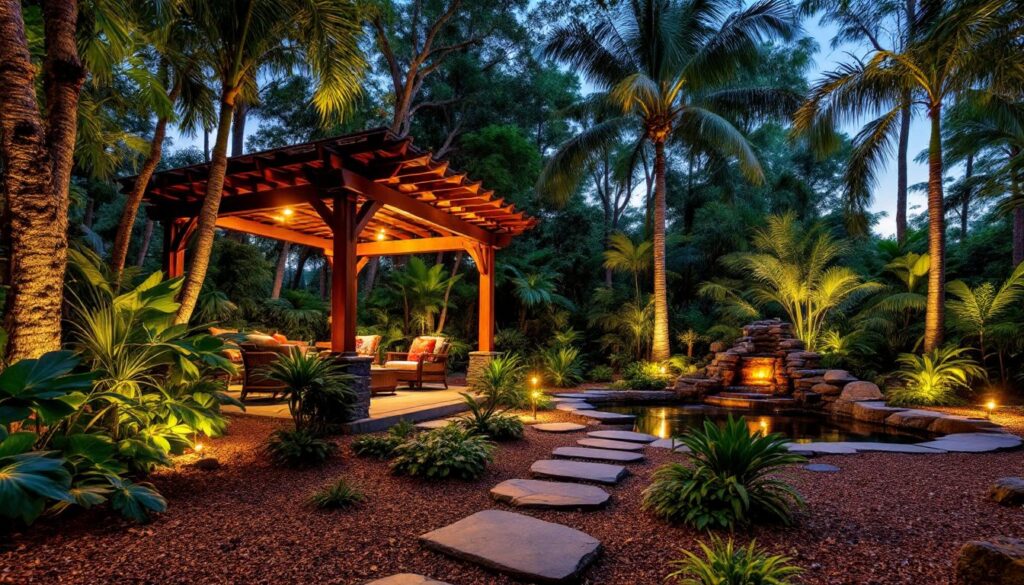

Creating a tropical backyard doesn’t require relocating to Hawaii or spending a fortune on exotic materials. Whether you live in a warm climate or simply want to bring vacation vibes home, tropical backyard ideas blend lush greenery, water features, ambient lighting, and smart hardscaping to craft an outdoor sanctuary. This guide covers seven practical approaches to building your own slice of paradise, from selecting climate-appropriate plants to installing pathways and lighting that transform evenings into resort-like experiences. Most projects are DIY-friendly, though some may benefit from professional help or local permits. Let’s dig in.
Table of Contents
ToggleKey Takeaways
- Choose climate-appropriate plants using the USDA Plant Hardiness Zone Map rather than visually tropical species that won’t survive your winter, ensuring your tropical backyard ideas actually thrive year-round.
- Water features are essential to tropical design—from budget-friendly tabletop fountains under $200 to DIY recirculating ponds ($800–$2,500)—positioned where evening light amplifies their visual and cooling impact.
- Layered ambient lighting with low-voltage LED path lights, uplighting for trees, and warm-white accent lights (2700K) transforms your tropical backyard into an evocative nighttime retreat without requiring an electrician.
- Start small with a 200-square-foot tropical corner ($300–$600) using smaller plants, heavy mulch, and one focal point to build confidence and test design before expanding to larger renovations.
- Hardscaping pathways and edging—whether stepping stones, concrete, or timber—provide essential structure and visual flow in dense tropical plantings, preventing designs from feeling chaotic.
- DIY budget-conscious strategies like buying clearance plants, installing low-voltage lighting yourself, and sourcing reclaimed stone can cut tropical backyard costs by 50% without sacrificing design impact.
Create A Lush Tropical Landscape With Native Plants
The foundation of any tropical backyard is dense, vibrant vegetation. But, success depends on choosing plants that actually thrive in your hardiness zone, not just plants that look tropical. This is where most DIYers stumble.
Choose The Right Plants For Your Climate Zone
If you’re in USDA zones 9–11, you have flexibility with true tropicals: hibiscus, bird of paradise, plumeria, and bougainvillea all perform well outdoors year-round. Zones 7–8 require hardier selections: cannas, ornamental grasses like miscanthus, and structural plants such as Japanese maple or dwarf conifers can create a tropical feeling without dying at first frost.
Before buying a single plant, identify your zone at the USDA Plant Hardiness Zone Map. Once you know your zone, visit a local nursery, not a big-box store, and ask which tropical-looking species survive winter outdoors. They’ll steer you toward survivors.
Layering is key. Start with a canopy: if you don’t have large shade trees, consider planting 20–25-foot specimens like crape myrtle, orchid tree, or, in warmer zones, coconut palms. These take 3–5 years to mature, so plant early. Beneath the canopy, add mid-story plants (8–15 feet): ti plants, tree ferns, and elephant ears create density and that enclosed-jungle feel. At ground level, fill with hostas, bromeliads, caladiums, or ferns depending on light.
Water drainage and soil prep matter tremendously. Tropical plants demand well-draining soil rich in organic matter, not Florida sand straight out of the ground. Amend planting beds with 3–4 inches of aged compost or bark mulch mixed into the native soil. This holds moisture in dry seasons while preventing root rot in wet ones.
One practical tip: group plants by water needs. Deep-rooted trees and drought-tolerant palms can manage with sporadic irrigation: ferns and caladiums need consistent moisture. Zoning them prevents overwatering delicate plants or underwatering thirsty ones. Drip irrigation on a timer is the handy neighbor’s best friend here, less guesswork, healthier plants.
Backyard Transformation Ideas often center on plants as the starring role, and tropical designs are no exception. Start with these three plant groups and build outward.
Design A Tropical Water Feature
Water is the heartbeat of tropical design. It cools the air, masks street noise, and creates that ambient soundscape that makes a backyard feel like an escape. Options range from simple to complex.
The easiest entry point is a tabletop fountain (under $200, requires only a hose and outlet). Position it near a seating area so you hear and see the water movement. Ceramic, stone, or resin models work: stick with darker colors to avoid a plastic look.
A step up is a recirculating pond or small water feature you can build yourself. Dig a basin 2–3 feet deep (deep enough so fish, if desired, can survive winter in cold zones), line it with a rubber pond liner (EPDM 45-mil thickness is standard), add a submersible pump, and let water cascade over stacked rocks or a custom spillway. Install a skimmer to keep debris out and your water clear. Budget: $800–$2,500 depending on size and stone choices. This is DIY-friendly, but digging and lining take a weekend.
Better Homes & Gardens highlights how water features anchor outdoor spaces, tropical designs especially benefit from moving water that reflects light and cools the microclimate.
For serious projects, a small pool or soaking tub demands permits, site evaluation, and often a contractor. Check local zoning codes: some areas require setback distances from property lines or restrict depths. Salt-water systems or natural filtration (gravel beds planted with aquatic plants) reduce chemical maintenance compared to chlorine pools, but they’re not DIY-friendly for most homeowners.
Whichever you choose, position your water feature where evening light hits it, setting sun, ambient uplighting, or landscape lights reflecting off the water multiply the visual drama. Water features work hardest when they’re lit and heard.
Install Ambient Lighting For Evening Ambiance
Tropical backyards should extend into evening hours. Strategic lighting transforms your space from pleasant daytime retreat into an evocative nighttime hideaway.
Begin with path lighting, LED landscape lights along walkways, installed 12–18 inches apart, create safety and flow. Bury the wiring in shallow trenches (6 inches deep is safe from most digging activities: call your utility locator first). Most LED path lights run on low-voltage wiring (12V), so no trenching permits or deep burial required. Install a transformer near your main home, run the wire along the edge of beds, and stake lights at intervals. Cost: $15–$40 per light.
Uplighting trees is transformative. Use a 5W–10W LED spotlight positioned at the base of a palm or tree fern, angled upward. The light silhouettes leaves and creates depth. Bury the fixture base slightly in mulch, and run low-voltage wire back to your transformer. These shots cost $30–$80 each but create the biggest visual payoff.
Accent lights highlight focal points: water features, seating areas, or architectural elements like a pergola. A simple stake-mount LED spotlight ($20–$50) does the job. Warm white (2700K color temperature) mimics sunset and feels tropical: avoid cool white or blue unless you’re going for a moody vibe.
All low-voltage landscape lighting uses the same 12V transformer. You can typically run 3–5 fixtures per 100W transformer, though check your kit specs. Wire connects to a timer so lights shut off after 11 p.m., saving energy. Installation is straightforward DIY work, no electrician needed for low-voltage systems. If you’re tying into standard 110V outlets, hire a licensed electrician: NEC code applies.
Add Comfortable Seating And Lounge Areas
A tropical backyard without seating is like a beach without a cabana. You need zones where people actually stay, not just pass through.
First, assess your yard’s natural gathering spots. Is there existing shade from a tree or house eave? Dappled afternoon light? Build seating there. A simple solution: place outdoor lounge chairs (weather-resistant wicker or metal frame, $150–$400 each) and a small side table ($50–$150) under that tree. Add waterproof cushions and throw pillows in tropical patterns (palm, hibiscus, geometric prints), suddenly you’ve got an oasis.
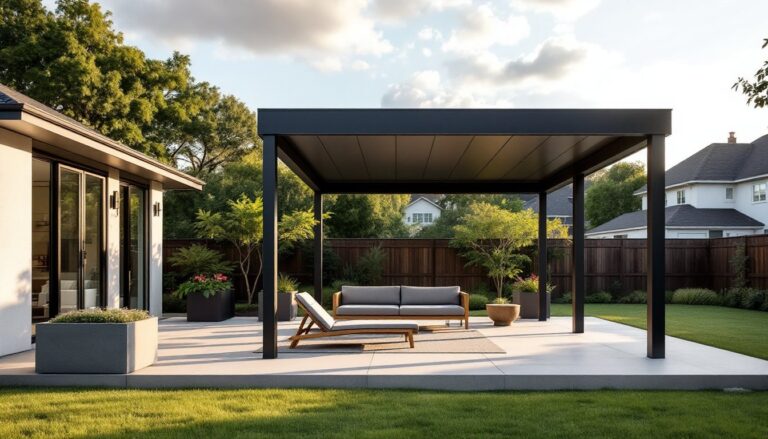
For larger gatherings, a covered lounge area anchors the space. This can be a pergola (aluminum or wood), a shade sail (tensioned fabric suspended overhead), or a retractable awning attached to the house. A pergola 12×12 feet costs $2,000–$5,000 installed or $800–$2,000 in materials if you build it yourself. The structure provides partial shade (still allows dappled light) and an open, airy feel. If you’re building DIY, use pressure-treated 6×6 posts sunk 2–3 feet into concrete footings (frost line depth varies by region, check local code), and 2×8 or 2×10 beams. Bolt connections, not nails: this structure bears wind load.
A shade sail is cheaper ($300–$1,000) and faster to install. It’s a triangle or rectangular piece of high-UV-blocking fabric tensioned between posts or the house and a post. It blocks 80–95% of sun while allowing air circulation. Installation requires lag bolts into solid wood, so again, proper anchoring matters.
Furniture-wise, choose durable materials: teak wood (ages beautifully and resists rot), powder-coated aluminum, or resin wicker. Avoid untreated wood or standard rattan, they rot in humid climates. Budget $1,500–$3,000 for a quality five-piece conversation set. Cheaper furniture ($500–$800 sets) works fine if replaced every 3–5 years.
Incorporate Tropical Hardscaping And Pathways
Hardscaping, the non-plant elements, gives structure to a tropical garden and solves practical problems: drainage, foot traffic, and visual anchoring.
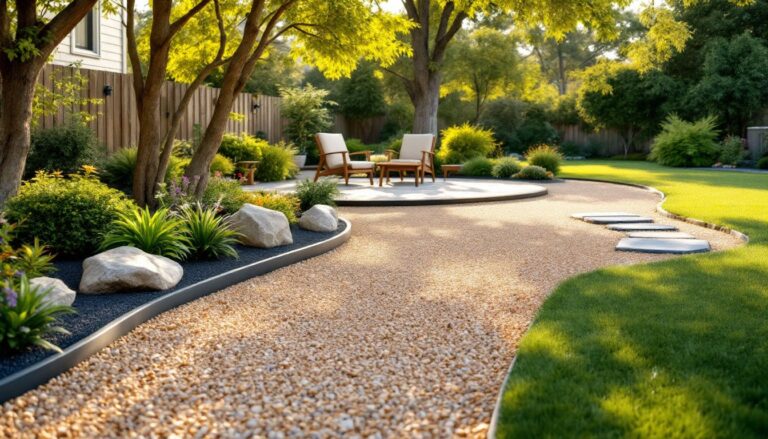
Pathways direct movement and define zones. The most tropical-feeling option is stepping stones through planting beds. Lay out a path with pavers or flat stones 18–24 inches apart (a comfortable stride). Set stones 1 inch above soil level so water drains around them: this prevents them from becoming puddles. Use decomposed granite, mulch, or low groundcover (mondo grass, Irish moss) between stones. Cost: $5–$20 per stone plus installation labor or DIY effort.
For heavier traffic, a poured concrete or stamped concrete pathway lasts decades. 4–6 inches thick, reinforced with rebar or wire mesh, finished in a natural gray or stained tropical color (terracotta, warm brown). Concrete is durable but industrial-looking unless you soften it with bordering plantings. Budget: $8–$15 per square foot installed.
Stacked stone or dry-stacked wood timbers along bed edges create terrace-like levels. Untreated wood will rot in 3–5 years: pressure-treated landscape timbers last 15+ years. Or use composite wood-plastic blends for 25+ years of life. A 12-inch-tall retaining wall 20 feet long costs $500–$1,500 depending on material.
Top Backyard Transformations showcase hardscaping as the skeleton supporting lush plantings. Gravel beds (decomposed granite or crushed stone) are cheap ($1–$3 per square foot) but require raking upkeep and don’t define space as clearly as hardscape.
Southern Living emphasizes how pathways and edging create visual flow in outdoor spaces, especially important in tropical designs where dense planting can feel chaotic without structure. Group your hardscape choices, all concrete, all stone, or all timber, for cohesion rather than mixing.
Budget-Friendly Tips For A Tropical Transformation
Not every homeowner has $15,000 to spend. Smart phasing and DIY work stretch budgets.
Start small: Pick one area, a corner, a patio surround, or a side yard, and make it lush. A 200-square-foot tropical corner (10×20 feet) is achievable in a weekend. Plant a focal tree, add 4–6 mid-story plants, layer groundcover, add one focal point (a simple urn or small fountain), and mulch heavily. Cost: $300–$600. Success here builds confidence and funds for phase two.
Buy smaller plants: A 5-gallon tree costs half as much as a 25-gallon specimen. Yes, it takes 2–3 years to reach visual maturity, but it establishes faster with less transplant shock. Nursery clearance sections (plants marked down 25–50%) often hide perfectly healthy specimens that just didn’t sell.
DIY the easy stuff: Mulching, planting (follow hole-digging best practices: dig hole as deep as the root ball, no deeper), spreading pea gravel, and assembling low-voltage lighting are weekend projects. Hire professionals for structural work (pergolas, retaining walls) and anything involving electrical code or permanent fixtures.
Hardscape reuse: Salvage yards, Craigslist, and Facebook Marketplace offer reclaimed stone, pavers, and wood at 50–70% less than new. A pallet of tumbled pavers might cost $200 used versus $600 new. Transportation and cleaning add work but save money.
Water features on a budget: A recirculating fountain ($150–$400) mimics a pond’s ambiance without digging. A $30 solar-powered patio light strung overhead delivers evening glow. Gardenista’s guide on pool landscape design shows how layered, budget-conscious plantings create the tropical illusion without luxury finishes.
Mulch heavily: 3–4 inches of mulch suppresses weeds, retains soil moisture, regulates temperature, and looks intentional. A truckload ($60–$100 delivered, covers ~200 sq. ft.) pays for itself in reduced watering and weeding. Refresh annually.