A grass-free backyard isn’t a bare, lifeless space, it’s a deliberate design choice that cuts maintenance, saves water, and opens up creative possibilities. Whether homeowners are tired of mowing, dealing with poor soil, or simply want a more functional outdoor area, ditching grass is increasingly popular. From hardscaped patios to decorative ground covers and raised beds, there are plenty of affordable ways to transform a yard without a single blade of grass. This guide walks through seven practical approaches to reimagine outdoor space, with honest cost breakdowns and DIY-friendly strategies.
Table of Contents
ToggleKey Takeaways
- Backyard ideas no grass range from paver patios ($2–$8 per sq. ft.) to gravel and raised beds, offering practical low-maintenance alternatives that save water and reduce mowing time.
- Paver patios and pathways create usable outdoor space with DIY-friendly installation for smaller areas, while permeable pavers solve drainage issues in poorly draining yards.
- Raised garden beds (4×8×12 inches, $50–$150) serve dual purposes as functional growing space and hardscape design elements that work on patios and compacted ground.
- Fire pits, pergolas, and water features ($30–$300+) anchor grass-free backyards with focal points that encourage outdoor living and break up flat, empty spaces.
- Mulch and ground covers like wood mulch ($30–$50/cubic yard) or rubber mulch ($60–$100/cubic yard) suppress weeds and provide cost-effective coverage for large areas.
- A successful backyard transformation starts small with one element (patio or bed) and expands gradually, creating intentional, low-maintenance outdoor spaces tailored to how you actually use your yard.
Hardscape Solutions for a Low-Maintenance Yard
Paver Patios and Pathways
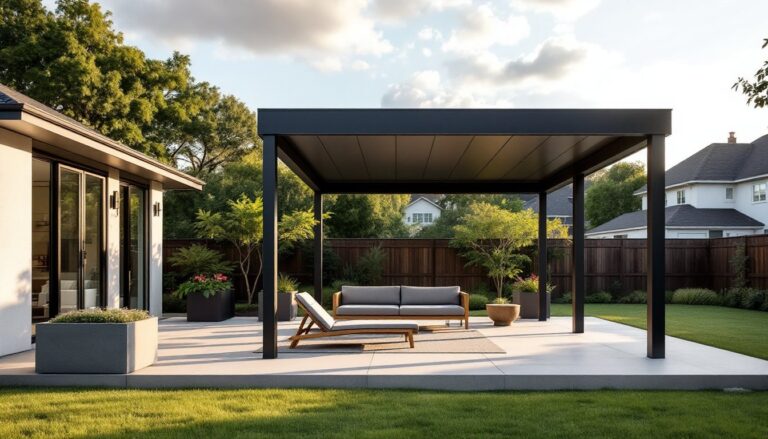
A paver patio creates instant usable space without the upkeep of a lawn. Pavers come in concrete, natural stone, or permeable varieties, ranging from $2–$8 per square foot installed (material only: labor varies by region). Concrete pavers are the budget-friendly workhorse: natural stone costs more but ages beautifully.
The DIY approach works well for smaller patios (up to 200 sq. ft.). Start by excavating the area 4–5 inches deep, then lay a 2-inch compacted gravel base. Set down landscape fabric to prevent weeds, then add 1 inch of leveling sand. Lay pavers in a running-bond or herringbone pattern, securing them with a rubber mallet. Fill joints with polymeric sand, it hardens when wet and resists washout.
For pathways, a 3-foot-wide stepping-stone or paver path only requires minor prep and creates clear traffic flow through the yard. Top Backyard Transformations can inspire specific layout ideas when planning multi-zone spaces.
Permeable pavers are worth the extra cost if drainage is poor: they let water drain through joints, reducing standing water and runoff. Large patios (400+ sq. ft.) often benefit from professional installation, especially on slopes.
Gravel and Stone Ground Covers
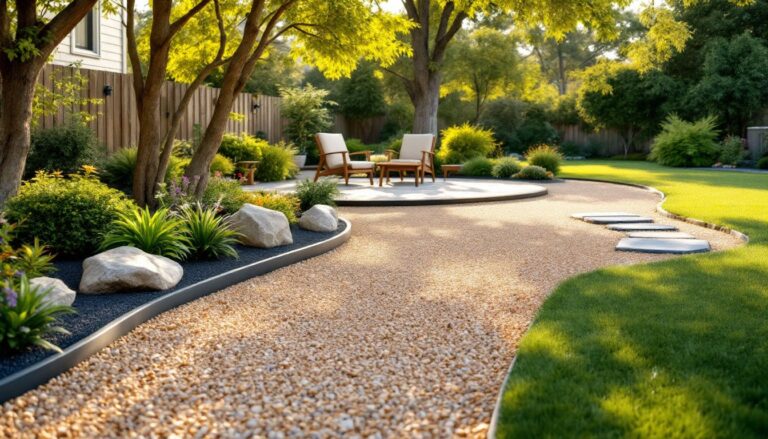
Pea gravel, crushed stone, and river rock are cheap ground covers that drain fast and suppress weeds when laid over landscape fabric. Budget $1–$2 per square foot for material: a 200 sq. ft. area needs roughly 2–3 tons, depending on depth.
Prep is minimal: edge the area with hardscape edging (wood, steel, or composite), rake level, and roll down 6-mil landscape fabric. Staple it down, overlap seams by 6 inches, and cover with 2–3 inches of gravel. Without fabric, weeds reclaim the space within a season.
Gravel works best in high-traffic zones (pathways, around seating) rather than large blank expanses. Accent with larger decorative boulders or driftwood to break up uniformity. River rock is heavier and doesn’t shift as easily as pea gravel but costs more and stays hotter underfoot in summer.
Garden Beds and Raised Planting Spaces
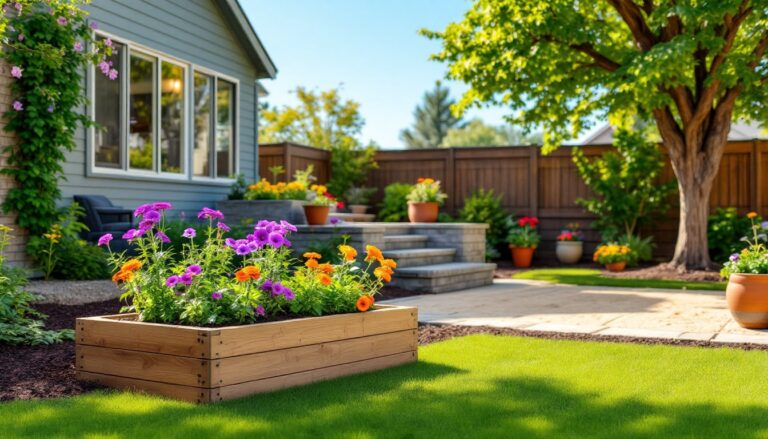
Raised beds serve double duty: they’re functional growing space and hardscape elements that define your yard’s layout. A 4-foot-by-8-foot-by-12-inch raised bed costs $50–$150 in materials (untreated cedar or composite), plus soil. Cedar lasts 10–15 years before rot sets in: composite costs more upfront but avoids wood replacement.
Building a bed is straightforward: cut 2×12 boards to length, corner them with galvanized screws or brackets, and square up using the 3-4-5 triangle method (measure 3 feet along one side, 4 feet on the adjacent side: the diagonal should be 5 feet, if not, adjust corners). No digging required, and they work on patios, poor soil, or compacted ground.
Fill with a soil mix, typically 40% topsoil, 40% compost, 20% perlite or coarse sand for drainage. Avoid pure compost: it settles and compacts over time. Budget $2–$4 per cubic foot delivered, or haul it yourself to save.
Tiered or sunken beds create visual interest and break up flat yards. Keep bed edges 12–18 inches tall so they double as seating: wider beds (4+ feet) let you reach the center without stepping into soil. Backyard Transformation Ideas can for inspiration on mixed plantings and seasonal rotations.
For a no-dig approach on grass, layer cardboard directly over sod, add landscape fabric, then fill with soil. The grass decomposes underneath over one season.
Decorative Features and Focal Points
A grass-free yard benefits from clear focal points, features that draw the eye and anchor the design. Fire pits, pergolas, water features, and seating areas give purpose to empty space and encourage outdoor living.
A DIY fire pit ring (12-inch diameter, stainless steel) costs $30–$60 and sits directly on gravel or patio. Surround it with Adirondack chairs on a circular gravel base, and you’ve created a gathering spot. Check local fire codes: many jurisdictions limit pit use in residential areas or require permits.
Pergolas (6×6 feet, basic wood construction) run $200–$400 in materials, pressure-treated 4×4 posts, 2×6 beams, 2×2 rafters, and galvanized hardware. They don’t require digging, just concrete footings in the ground or weighted deck blocks. Vines don’t need grass: train them up pergola posts for shade and privacy. Backyard Transformation Techniques offer step-by-step framing and site prep guidance for structural elements.
Water features, small fountains, birdbaths, or recirculating ponds, add movement and sound. A $100–$300 fountain kit (pump, basin, stone) plugs into a standard outlet and runs quietly. Place it near seating to maximize ambiance.
Decking or composite pavers can frame these features. A small 8×10 deck section ($1,500–$2,500 DIY) becomes a gathering zone without the grass maintenance. Ensure proper drainage so water pools don’t form around seating areas.
Mulch and Alternative Ground Coverings
Wood mulch and bark chips are the budget option for covering large areas quickly. Cost runs $30–$50 per cubic yard delivered (covers roughly 300 sq. ft. at 2 inches deep). Red cedar and hardwood mulch last 2–3 years before decomposing: engineered mulch lasts slightly longer.
As with gravel, lay landscape fabric first. Spread 2–3 inches of mulch over it, keeping it a few inches away from tree trunks and planting stems to prevent rot. Mulch suppresses weeds, regulates soil temperature, and adds organic matter as it breaks down.
Rubber mulch (recycled tire crumbles) lasts 10+ years and never needs replacement. It’s more expensive ($60–$100 per cubic yard) but makes sense in high-traffic areas or playgrounds. It doesn’t decompose, so it’s not for planting beds: reserve it for pathways and under structures.
For a finished look without much plant cover, colored mulch in dark brown or black blends with hardscape. Avoid bright dyes: they fade within a year. Test a small area first, some homeowners find dyed mulch gimmicky: natural bark reads more sophisticated.
Cork and coconut coir are biodegradable alternatives gaining traction. Cork ($100+ per cubic yard) is spongy and soft underfoot, ideal near play areas. Coir breaks down within 2–3 years but smells pleasant and offers good weed suppression. Both cost more than wood mulch but less than rubber.
Layered ground covers, combining hardscape, planting beds, mulch, and stone, create visual depth. Recent landscape design discussions on sustainable outdoor spaces highlight how blending materials prevents monotony and supports healthy plant growth in grass-free yards.
Conclusion
A grass-free backyard isn’t extreme or experimental, it’s a pragmatic, often more attractive alternative that cuts water bills and mowing time. Combining hardscape, raised beds, decorative features, and mulch creates a cohesive, low-maintenance outdoor space tailored to how homeowners actually use their yards. Start small (a patio or bed), then expand. Successful backyard transformation techniques build gradually and improve with each season. The goal is a yard that works harder and looks intentional, not abandoned.